
Pick up any bag of dog food and turn it over. What looks back at you is a combination of regulatory compliance, genuine nutritional information, and sophisticated marketing designed to make every product look premium. Knowing how to distinguish between these three categories will make you a dramatically better shopper — and will protect your dog from foods that look good on the front of the bag but tell a different story on the back. This guide walks through every section of a dog food label, explains what it actually means, and gives you a practical checklist you can use in the pet store or while shopping online.
The Five Sections of a Dog Food Label
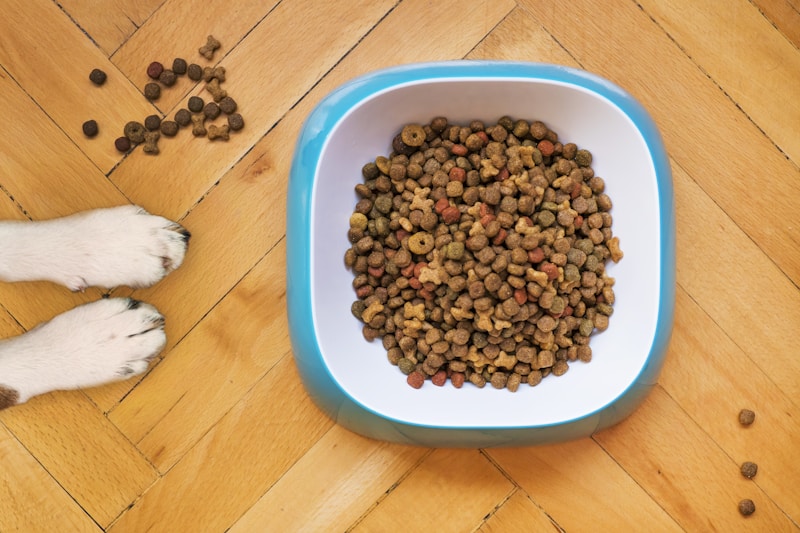
Every dog food label contains five core sections, each regulated (to varying degrees) and each telling you something different about the product:
- Product name
- Ingredient list
- Guaranteed analysis
- Nutritional adequacy statement
- Feeding guidelines
In the US, the FSSAI (Food Safety and Standards Authority of the US) Pet Food Regulations 2020 govern what must appear on labels. In practice, premium brands also follow AAFCO (Association of American Feed Control Officials) standards for export markets, and their US products often reflect this higher standard. Budget US brands may meet only the minimum FSSAI requirements.
Section 1: The Product Name — More Regulated Than You Think
The product name is the first piece of information on a label, and in markets that follow AAFCO naming rules, it is tightly regulated. Understanding the naming conventions helps you know immediately how much of a specific ingredient is actually in the food.
The Percentage Rules (AAFCO-following brands)
- "Chicken Dog Food" or "Beef Formula" — When a single ingredient is the entire product name or the word "formula," "entrée," "dinner," or "platter" is absent, that ingredient must comprise at least 95% of the total product weight (excluding water). These are the most ingredient-dense options.
- "Chicken Dinner," "Beef Entrée," "Salmon Platter" — The addition of words like dinner, entrée, or platter reduces the minimum requirement for that ingredient to 25% of the total product weight. Significantly less than the name might suggest.
- "With Chicken" or "With Beef" — "With" is a red flag word. It requires only 3% of the named ingredient. A food called "Adult Dog Food with Chicken" may contain barely any chicken at all.
- "Chicken Flavour" — No minimum percentage required. The food merely needs to be detectable as chicken-flavoured, which can be achieved with tiny amounts of digest or flavouring.
the US note: FSSAI does not have equivalently specific naming percentage rules. US brands can use these terms more loosely. For US brands, the ingredient list is a more reliable guide than the product name.
Section 2: The Ingredient List — The Most Important Section

The ingredient list is listed in descending order by weight before processing. This is the most informative section of the label, but it requires understanding several nuances to interpret correctly.
"Chicken" vs "Chicken Meal" — A Critical Distinction
Chicken (fresh): Whole chicken, typically 70-75% water. After the high-heat manufacturing process, this water evaporates, and what seemed like the most abundant ingredient significantly shrinks. A 1 kg portion of fresh chicken becomes roughly 250g of dried chicken after processing.
Chicken meal: Chicken that has already been rendered (cooked under pressure) and had its moisture removed before being added to the formula. It contains approximately 65-70% protein on a dry matter basis and is a highly concentrated, high-quality protein source. When chicken meal is the first ingredient, you are getting a genuinely protein-dense food. Chicken meal is not a lesser ingredient — it is often a better indicator of actual protein density than fresh chicken listed first.
Chicken by-products: The clean parts of slaughtered chickens other than meat — includes liver, kidneys, heart, lungs, and bone. These are not necessarily poor quality. Liver is one of the most nutritionally dense foods available. Named by-products (chicken by-products) are acceptable ingredients. Unnamed "meat by-products" from unspecified animals are of variable and typically lower quality.
Chicken digest: A flavouring ingredient made from enzymatically or chemically treated chicken tissue. Used in small amounts primarily for palatability. Not a significant nutritional contributor. Its presence tells you nothing much about the food quality overall.
Ingredient Splitting: The Hidden Trick
This is one of the most important concepts for reading labels. Manufacturers sometimes split one ingredient into multiple sub-forms to push each form further down the list — making their combined weight less obvious.
Example: A label reads: Chicken, Corn Meal, Corn Gluten Meal, Corn Grits, Soybean Meal...
Chicken is listed first, but if you combine corn meal + corn gluten meal + corn grits, the total corn content likely exceeds the chicken content. Each corn derivative is individually listed lower, but collectively corn is the dominant ingredient. This practice is legal but deceptive.
To spot ingredient splitting, look for the same base ingredient appearing in multiple forms — corn, corn meal, corn gluten, corn starch — or pea, pea protein, pea fibre, pea starch — and mentally add their contributions together.
Identifying Quality Ingredients
Good signs in the first five ingredients:
- A named meat as the first ingredient: "chicken," "deboned turkey," "Atlantic salmon," "lamb"
- A named meat meal in the first three: "chicken meal," "salmon meal," "turkey meal"
- A whole grain or digestible carbohydrate: "brown rice," "oatmeal," "sweet potato"
- A named fat: "chicken fat," "salmon oil" — not "animal fat"
Ingredients to be cautious about:
- "Meat meal" or "animal meal" without a named species: could be any animal, variable quality, inconsistent nutritional profile
- "Animal fat" without species: same issue — unknown source, variable fatty acid profile
- Corn syrup or sugar: no nutritional value, used purely for palatability and to mask poor ingredient quality
- Artificial preservatives BHA and BHT: effective preservatives but associated with health concerns at high doses; ethoxyquin is the most controversial
- Artificial colours: Red 40, Yellow 5, Yellow 6, Blue 2 — no nutritional role whatsoever; dogs do not care what colour their food is
- Caramel colouring: a browning agent that makes food look more meat-like; purely cosmetic
- Propylene glycol: a moisture-retaining agent used in semi-moist foods; prohibited in cat food in the US but still found in some US dog treats
Section 3: The Guaranteed Analysis — Understanding the Numbers
The guaranteed analysis provides minimum and maximum nutrient percentages. Standard requirements under both AAFCO and FSSAI include:
- Crude Protein (minimum): The total protein content, measured by nitrogen. "Crude" means total nitrogen-based protein — it does not distinguish between digestible and indigestible protein sources.
- Crude Fat (minimum): Total fat content by ether extraction.
- Crude Fibre (maximum): Indigestible plant fibre — a maximum value because fibre above certain levels reduces overall digestibility.
- Moisture (maximum): Water content — critical for comparing dry to wet food accurately.
Dry Matter Basis: The Only Fair Comparison
Raw percentages on labels are misleading because dry food (10% moisture) and wet food (78% moisture) cannot be directly compared. The dry matter basis calculation removes moisture from the equation:
Formula: Dry Matter % = (Nutrient % on label) ÷ (100 − Moisture %) × 100
Example — comparing a dry food to a wet food:
- Dry food: 28% protein, 10% moisture → Dry matter protein = 28 ÷ 90 × 100 = 31.1%
- Wet food: 10% protein, 80% moisture → Dry matter protein = 10 ÷ 20 × 100 = 50%
The wet food has dramatically higher actual protein density despite its lower label number. Dry matter basis is the only valid way to compare foods across different moisture levels.
What Protein and Fat Levels to Look For
General guidelines for dry matter basis percentages in adult dog food:
- Protein: 22-32% for adult dogs; 25-35% for puppies; 18-22% for senior dogs with kidney considerations
- Fat: 10-18% for adult dogs; 8-12% for dogs prone to pancreatitis or with sensitive stomachs; above 20% is high and appropriate only for very active working dogs
- Fibre: 2-5% for most dogs; higher fibre (5-10%) for weight management; lower fibre for sensitive stomachs
Section 4: The Nutritional Adequacy Statement — The Most Overlooked Section

This statement may be the single most important quality indicator on the label, yet it is the section most buyers skip entirely. It tells you how the manufacturer determined the food is nutritionally complete.
Two Types of Statements
Type 1 — Nutrient Profile (lower standard):
"[Product name] is formulated to meet the nutritional levels established by the AAFCO Dog Food Nutrient Profiles for [life stage]."
This means the recipe was calculated on paper to hit minimum nutrient levels. No dogs were actually fed the food and evaluated. The calculation may be accurate, but it does not account for actual bioavailability — whether a nutrient is present in a form the dog can absorb and use.
Type 2 — Feeding Trial (higher standard):
"Animal feeding tests using AAFCO procedures substantiate that [product name] provides complete and balanced nutrition for [life stage]."
This means real dogs were fed this food for a minimum period (26 weeks for adult maintenance, until weaning for reproduction) and passed health evaluations including bloodwork. This is a significantly higher standard and indicates the manufacturer has invested in genuine quality validation.
When given a choice between an otherwise similar product with a nutrient profile statement and one with a feeding trial statement, choose the feeding trial product.
Life Stage Designations
- "All life stages": Meets the requirements for growth (puppies) and reproduction (pregnant/nursing dogs), which are more demanding than adult maintenance. Technically fine for adults but may provide more calories and nutrients than an adult dog needs.
- "Adult maintenance": Meets adult dog requirements only. Do not feed this to puppies or pregnant dogs.
- "Puppy" or "Growth": Higher calcium, phosphorus, and protein to support development. Not appropriate for adults long-term.
- "Senior": AAFCO has no separate senior nutrient profile — "senior" labelling is not standardised and is largely marketing. Evaluate senior foods on their actual nutrient profiles.
Section 5: the US-Specific — FSSAI Requirements and Gaps
The FSSAI Pet Food Regulations 2020 marked a significant improvement over the previous regulatory vacuum in the US, but important gaps remain that pet owners should understand.
What FSSAI Requires
- Product name, type (complete/complementary), and species it is intended for
- Net weight in metric units
- Ingredients in descending order by weight
- Guaranteed analysis: minimum crude protein and fat, maximum crude fibre and moisture
- Manufacturer name, address, and contact
- Batch/lot number
- Manufacturing date and best-before date
- Feeding instructions appropriate for the life stage
What FSSAI Does Not Require
- Feeding trials: A food can be declared "complete and balanced" in the US based on nutrient calculation alone. No feeding trial equivalent to AAFCO standards is required.
- AAFCO-style naming percentage rules: "Chicken Dinner" does not need to meet the 25% threshold in the US.
- Amino acid profiles beyond crude protein: The guaranteed analysis only requires crude protein — not whether that protein contains adequate taurine, methionine, or other essential amino acids.
- Heavy metal testing disclosure: Not required on the label.
- Caloric content: Not mandatory on US labels (many imported foods include kcal/kg voluntarily).
The practical implication: for US-manufactured brands, the ingredient list and the manufacturer's reputation matter more than the guaranteed analysis alone. A brand that publishes nutritional testing certificates, sources from FSSAI-licensed suppliers, and has a track record without major recall events provides more assurance than one that meets only minimum label requirements.
Practical Checklist: Use This in the Pet Store
Print this or save it on your phone for the next time you are evaluating a dog food:
Label Evaluation Checklist
First ingredients (positive signals):
- Named meat or fish is the first ingredient ("chicken," "salmon," "turkey")
- A named meat meal appears in the first three ingredients ("chicken meal")
- A whole grain or recognisable carbohydrate in the first five ("brown rice," "sweet potato")
- A named fat source ("chicken fat," "fish oil")
Red flags — consider avoiding:
- "Meat meal," "animal meal," or "meat by-products" without a named species
- Corn syrup, sugar, or glucose listed as ingredients
- Artificial colours: Red 40, Yellow 5/6, Blue 1/2, caramel colour
- BHA, BHT, or ethoxyquin as preservatives
- Same ingredient in multiple forms in the top 10 (ingredient splitting)
- "Animal fat" without a named species
- The phrase "with [protein]" in the name — only 3% minimum
Nutritional adequacy statement:
- Does it mention AAFCO or an equivalent standard?
- Does it say "feeding trials" or only "formulated to meet nutrient profiles"?
- Is the life stage appropriate for your dog?
Guaranteed analysis:
- Calculate dry matter protein: protein% ÷ (100 − moisture%) × 100. Is it 25-32% for an adult dog?
- Is fat in the 10-18% range on dry matter basis?
- Is fibre below 5% for a regular diet?
Manufacturer transparency:
- Is the manufacturer's address and batch number present?
- Does the brand publish nutritional testing data on its website?
- Has the brand had product recalls? (Check online)
Common Marketing Terms That Mean Nothing Specific
The front of the bag is pure marketing. These terms have no standardised regulatory meaning in the US:
- "Natural" — No regulatory definition in US pet food. Can be applied to almost anything.
- "Human-grade" — No legal definition in the US. Unverifiable marketing claim.
- "Premium" or "Super Premium" — Marketing categories with no regulatory threshold.
- "Holistic" — Has no regulatory definition in pet food globally.
- "Ancestral" — Marketing language, no nutritional standard attached.
- "No artificial preservatives" — Can still contain artificial colours and flavours. Check the ingredient list.
- "Vet recommended" — Could mean one vet was paid to endorse the product. Meaningless without context.
Putting It All Together: An Example Label Walkthrough
Consider this hypothetical dog food label:
Ingredients: Chicken, Chicken Meal, Brown Rice, Oatmeal, Chicken Fat (preserved with mixed tocopherols), Dried Beet Pulp, Fish Oil, Chicory Root Extract, Dried Lactobacillus acidophilus fermentation product... Guaranteed Analysis: Crude Protein min 26%, Crude Fat min 14%, Crude Fibre max 3.5%, Moisture max 10% Nutritional Adequacy Statement: "Animal feeding tests using AAFCO procedures substantiate that this food provides complete and balanced nutrition for adult dog maintenance."
Reading this label:
- Chicken first, chicken meal third — strong animal protein foundation
- Brown rice and oatmeal — quality, digestible carbohydrates
- Chicken fat preserved with tocopherols — named fat with natural preservation, no BHA/BHT
- Beet pulp and chicory root — good prebiotic fibre sources
- Fish oil — omega-3 addition
- No artificial colours, no sugar, no unnamed by-products
- Dry matter protein: 26 ÷ 90 × 100 = 28.9% — appropriate for adult dogs
- Feeding trial statement — highest quality standard
This is a well-formulated food. Compare it to a budget food where the first five ingredients are: Corn Meal, Meat By-Products, Corn Gluten Meal, Animal Fat, Wheat Middlings — and the difference in quality becomes immediately apparent from the label alone.
Reading dog food labels is a skill that takes a few minutes to learn and will serve your dog for its entire life. Use the checklist above until the evaluation becomes automatic, and you will be a more informed buyer than the vast majority of dog owners in the US.
Find the Best Products for Your Pet
Every product we recommend is independently tested by our veterinary team.
Browse Tested Products →Frequently Asked Questions




Comments 0
No comments yet. Be the first to share your thoughts!